Historically, delidded CPUs have been the prerogative of die-hard enthusiasts who customized their rigs to the last bit. But with emergence of specially-designed delidding tools, removing the integrated heat spreader from a CPU has become a whole lot easier, opening the door to delidding for a wider user base. To that end, EK is now offering all-in-one liquid cooling systems tailored specifically for delidded Intel LGA1700 processors.
The key difference with EKWB's new EK-Nucleus AIO CR360 Direct Die D-RGB – 1700 cooler is in the cooling plate on the combined base pump block. While the rest of the cooler is essentially lifted from the company's premium 360-mm closed-loop all-in-one liquid cooling systems, the pump block has been equipped with a unique cooling plate specifically developed for mating with (and cooling) of delidded Intel's LGA1700 CPUs.
Meanwhile, since delidded CPUs lose the additional structural integrity provided by the IHS, EK is also bundling a contact frame with the cooler that is intended to protect CPUs against warping or bending by maintaining even pressure on the CPU. A protective foam piece is also provided to prevent liquid metal from spilling over onto electrical components surrounding the CPU die.
According to the company, critical components of the new AIO, such as its backplate and die-guard frame, were collaboratively developed by EK and Roman 'Der8auer' Hartung, a renowned German overclocker who has developed multiple tools both for extreme overclockers and enthusiasts. In addition, EK bundles Thermal Grizzly's Conductonaut liquid metal thermal paste (also co-designed with Der8auer) with the cooling system.
And since this is a high-end, high-priced cooler, EKWB has also paid some attention to aesthetics. The cooler comes with two distinct pump block covers: a standard cover features a brushed aluminum skull, surrounded by a circle of LED lighting that creates a classic yet bold aesthetic, and an alternate, more minimalist cover without the skull.
Traditionally, cooling for delidded CPUs has been primarily handled by custom loop liquid cooling systems. So the EK-Nucleus AIO CR360 Direct Die D-RGB – 1700 stands out in that regard, offering a self-contained and easier-to-install option for delidded CPUs. Especially as delidding has been shown to reduce temperature of Intel's Core i9-14900K CPU by up to 12ºC, it's no coincidence that EKWB is working to make delidding a more interesting and accessible option, particularly right as high-end desktop CPU TDPs are spiking.
Wrapping things up, EKWB has priced the direct die cooler at $170, about $20 more than the EK-Nucleus AIO CR360 Lux D-RGB cooler designed for stock Intel processors. The company is taking pre-orders now, and the finished coolers are expected to start shipping in mid-March 2024.
Modern higher-end 14 and 16-inch-class notebooks offer performance that is enough for the vast majority of productivity and even content creation workloads. As a result, the main limitation of notebook's capabilities in many cases is their insufficient screen real estate. Over the past few years, several leading PC makers have made numerous attempts to fix this (e.g., Lenovo's Yoga Book 9i, Razer's Valerie, and Apple's Sidecar). Now, it is time for Asus to demonstrate its vision.
The Asus Zenbook Duo (UX8406) is a dual-screen 14-inch-class laptop with a detachable keyboard that works as a classic notebook with one display, a machine with two touchscreens, a laptop with two monitors, or a desktop mode. The notebook takes some pages from Lenovo's Yoga Book 9i, but Asus certainly wanted it to be more appealing to those used to classic notebooks but who dare to try something new, not the other way around.
The Asus Zenbook Duo has a thickness of 1.9 cm (0.75 inches) and weighs 1.4 kilograms (3.09 lbs), thinner and lighter than Apple's MacBook Pro 14. The premium version of the machine comes with two 3K 120Hz OLED 120Hz screens (with VESA's True Black 500 badge) and a kickstand to make it possible to use two screens in vertical mode. By contrast, an affordable version of the laptop is equipped with two 2K 60Hz OLED screens.
On the performance side of matters, the Asus Zenbook Duo (UX8406) is based on up to Intel's Core Ultra 9 185H 'Meteor Lake' processor (16 cores, 22 threads) with integrated Arc graphics that can be paired with up to 32 GB of LPDDR5X memory, and up to 1 TB of SSD storage with a PCIe 4.0 interface.
As for connectivity, the Asus Zenbook Duo (UX8406) features a Wi-Fi 6E + Bluetooth adapter, two Thunderbolt 4 connectors, an HDMI 2.1 display output, a USB 3.2 Gen 1 Type-A port, and a 3.5-mm audio jack for headsets.
To ensure long battery life (up to 13.5 hours with one screen and up to 10.5 hours on two screens of video playback), Asus equipped its Zenbook Duo with a rather massive 75Wh battery.
For now, Asus does not disclose the pricing of its Zenbook Duo (UX8406) or when it is set to be available. Meanwhile, since the company has disclosed all the specifications, we have every reason to believe the notebook will be available sooner rather than later. As for the price, this is an innovative premium notebook so that it will be priced accordingly. Interestingly, to add value to the laptop, Asus plans to include a backpack and stylus in some countries' product bundles.
O Pixel Watch 2 teve o seu lançamento anunciado a 4 de outubro deste ano de 2023 num dos eventos mais conhecidos na área da tecnologia, o evento anual Made By Google. O relógio também foi apresentado no Youtube da marca com a frase de introdução “Help by Google and health by Fitbit”.
O Google Pixel Watch 2 já pode ser comprado nas lojas portuguesas e está na ordem dos quase 400€. Mas sendo um relógio deste valor, será que vale a pena o investimento? Falaremos em mais profundidade sobre este gadget da Google ao longo do conteúdo.
O que precisa de saber sobre este novo lançamento Google?
Este novo relógio Google traz várias melhorias em relação ao Pixel Watch original, oferecendo um equilíbrio perfeito entre elegância, desempenho e funcionalidades de última geração aos seus utilizadores. Mas já se estava à espera de melhorias quando se soube da parceria entre a Google e a Fitbit.
Começando pelo desempenho deste relógio, sabia que este usa o processador mais recente Wear da Qualcomm? Esta escolha torna o relógio Google mais ágil e rápido, mesmo nas transições entre aplicações. E isto para não falar, também, da bateria que dura cerca de 24 horas ou 12 horas após um carregamento rápido de 30 minutos.
Este relógio pode ser usado o ano inteiro, mesmo nos longos dias de praia por ser resistente à água.
Pixel Watch 2 com desenho elegante e minimalista
Este relógio tem um design elegante e minimalista e está disponível numa grande variedade de cores. Dificilmente terá dificuldade em combinar o novo relógio com o seu estilo pessoal. Quanto às braceletes, como as dimensões são muito próximas ao modelo anterior, não terá problemas em usá-las neste novo relógio.
A estrutura do relógio é em aço inoxidável e a sua tela é circular vívida, AMOLED. A resolução deste relógio é inferior quando comparado ao modelo anterior (384 x 384 px), podendo resultar num aumento na duração da bateria. De uma forma geral, a construção oferece uma sensação premium.
Passando um pouco para o software, o seu uso é simples e intuitivo e o utilizador pode personalizá-lo como bem entender.
A parceria com a Fitbit veio melhorar as funcionalidades do relógio
A app Google Fit foi melhorada para oferecer informações em mais detalhe e sugestões personalizadas, para uma experiência muito mais completa. A nível de informações, o novo relógio é capaz de captar a frequência cardíaca (com sensores avançados), calorias queimadas, qualidade do sono, entre outros, e ainda detetar quedas, usar emergência SOS ou ter acesso a informação médica.
O relógio oferece melhores resultados quando incorporado com um telemóvel Google.
Quais os outros lançamentos que marcaram a marca este ano?
Mas não fica por aqui! A marca esmerou-se este ano e lançou ainda um dos melhores telemóveis do mercado, o Pixel 8 e a sua versão Pro, e os Pixel Buds Pro que também se destacam graças à sua qualidade de som.
Os Pixel Buds Pro trazem aos seus utilizadores algumas melhorias alimentadas pela inteligência artificial, garantindo um som com menos interferências e uma redução na transmissão do áudio (excelente para gaming).
Passando para o telemóvel, os novos Pixel 8 e Pixel 8 Pro já podem ser comprados em Portugal e chegam com atualizações de sete anos. Estes são os primeiros modelos a serem lançados em Portugal, uma excelente notícia para os fãs da marca.
O novo modelo Google é uma excelente opção para os amantes de fotografia por causa do seu magnífico sistema de câmaras e ainda dos recursos para edição de fotos. Pode até criar uma foto perfeita usando várias fotografias, graças à inteligência artificial.
Sendo assim, com base em todas as informações partilhadas, acreditamos que vale a pena comprar este novo gadget da marca tanto para a prática de exercício físico, como para usar no quotidiano. E, o melhor, terá acesso a uma subscrição de 6 meses no Fitbit Premium com a compra deste relógio Google.
Frore Systems has introduced a revamped version of its AirJet Mini solid-state active cooling system at CES 2024. The new AirJet Mini Slim device retained performance of its predecessor (the AirJet Mini), but is slightly thinner, slightly lighter, and smarter too, as it can now clean itself and sense its temperature.
On performance side of matters, the AirJet Mini Slim generates 1750 Pascals of back pressure and can dissipate up to 5.25W of heat (at 85°C die temperature and at 25°C ambient temperature), which is in line with its predecessor. It also maintains an identical footprint of 27.5 x 41.5 mm as the original solid-state active cooling system.
Overall, there are two key enhancements in the AirJet Mini Slim compared to its predecessor: its thickness has been reduced to just 2.5mm, coming down from the previous 2.8mm; and it has become lighter, now weighing a mere 8 grams, down from 9 grams.
Another significant upgrade of the AirJet Mini Slim is its intelligent self-cleaning system, which reverses the airflow to remove any accumulated dust in the filters to ensure consistent performance of the cooler itself as well as device it is cooling down. Frore says that the capability is backwards compatible with the original AirJet Mini, which probably indicates that it is enabled by firmware or software.
Finally, the AirJet Mini Slim introduces thermal sensor — called Thermoception — that enabled the cooler to independently sense its own temperature and adapt its cooling efficiency as needed. This self-contained function is particularly advantageous for devices that cool down things which do not have their own temperature sensors, such as processors, SSD controllers, and memory chips.
All of the refinements of Frore's AirJet Mini Slim serve two purposes: expand the addressable markets for these solid-state active cooling systems and make them more adaptable to needs of customers.
"Reducing the chip's thickness by 0.3mm is a game-changer for products requiring excellent thermal management in increasingly thinner devices," said Dr. Seshu Madhavapeddy, Founder and CEO of Frore Systems. "AirJet Mini Slim will bring much-needed performance improvements to ultra-thin electronic devices like fanless laptops, tablets, and smartphones."
What remains to be seen is when we are going to see Frore's AirJet Mini Slim in actual devices. While there are numerous companies evaluating the technology, so far there are just a handful of products that have reached the market that use AirJet Minis.
Micron's consumer brand, Crucial Memory, has been putting extra focus on the SSD market over the last few quarters. The brand was marketing entry-level QLC drives in the 2018 - 2022 time frame. Recently, emphasis has also been placed on cutting-edge SSDs - both internal (such as the Gen4 T500 and Gen5 T700) and external (such as the X10 Pro). Vertical integration, coupled with Micron being the first flash manufacturer to achieve volume production of 200+ layer 3D NAND, has been crucial to Crucial's success in these segments.
At the 2024 CES, Micron had a couple of interesting USB4 SSD technology demonstrations for its resellers / partners and invited media. These are essentially products under development (with no guarantees that they would make it to the market in their current form). Both products are bridge-based solutions using the ASMedia ASM2464PD USB4 to NVMe accessory controller. The key update over the popular ASM2364 (USB 3.2 Gen 2x2 upstream, and PCIe 3.0 x4 downstream) is the shift to a 40 Gbps USB4 upstream port along with a PCIe 4.0 x4 link downstream. The power delivery component of the Type-C specification is also implemented within the controller.
The portable SSD version has a gumstick form-factor, with the transparent casing housing a M.2 2280 SSD - a 2TB Gen4 Micron 3400 OEM drive in this case.
The drive is expected to be passively cooled, with the larger form-factor enabling a thermal performance similar to that of the X10 Pro / X9 Pro. Bridge-based solutions are the standard option for high-performance portable SSDs.
Similar configurations (bridge + DRAM-equipped M.2 SSD) such as the SanDisk Extreme PRO v2 (E81) have yielded excellent all-round performance for a wide range of workload types. We expect the same to continue in the USB4 era. That said, vendors like ADATA using the same bridge have opted for active cooling to avoid thermal throttling in their USB4 PSSD. It remains to be seen if this design will remain fanless in its final form (and if it does, thermal performance would be an interesting aspect to analyze).
The USB4 desktop SSD is a comparatively unique product. This is an actively cooled design with a small fan, and uses a U.3 SSD inside. Other vendors like OWC have tried multiple M.2 SSDs configured with software RAID in a large-sized enclosure, but this one has a single high-capacity drive (8TB in the sample being demonstrated).
Designed for stacking (without daisy-chaining support), the eSSD also requires external power. The drive can also power notebooks through the USB4 connection, which can make up for the presence of a discrete power adapter. Specifics of the power delivery will only be available when the product is officially introduced. This product could be made more attractive by having some downstream USB Type-A / Type-C ports (eSSD in a dock). That said, there are two aspects that will probably make this the performance and consistency king of USB4 SSDs - the presence of a fan, and the use of a Gen4 U.3 SSD (which is most likely an enterprise drive that advertises worst-case performance and not speeds in the SLC cache region).
The current crop of USB4 SSDs are focused on performance, and sacrifice power- and energy-efficiency. Those aspects will be addressed by native USB4 UFD controllers like Phison's U21. Silicon Motion tends to keep controllers under wraps until reference designs are ready to ship (if the introduction of the SM2320 was anything to go by). We expect external / portable SSD vendors to eventually add native UFD controller-based products to their USB4 lineup, but that seems unlikely to happen in the first half of 2024.
The success of Valve's Steam Deck console has clearly inspired numerous makers of gaming hardware to try their luck with portable gaming systems. One of such companies is MSI, which introduced its Claw handheld console at CES. The Claw A1M mobile console uses Intel's latest Core Ultra 'Meteor Lake' platform along with Windows 11 operating system and is compatible with the vast majority of PC games.
MSI's Claw game console is equipped with a 7-inch touch-enabled IPS LCD display with a 1920x1080 resolution, a 120 Hz refresh rate, and an up to 500 nits typical brightness (which is akin to luminance of premium laptops), which is similar to what Asus ROG Ally offers. As for audio, the gaming device comes equipped with two 2W speakers.
The Claw A1M console is powered by Intel's latest Core Ultra 155H 'Meteor Lake' system-on-chip with six high-performance cores, eight energy-efficient cores, two low-power cones, and a built-in Arc GPU with eight Xe tiles (1024 stream processors, eight ray tracing units). The processor is paired with 16 GB of dual-channel LPDDR5-6400 memory and an SSD in an M.2-2230 form-factor as well as a PCIe Gen4 x4 interface.
To ensure consistent performance of the unit under high loads, MSI equipped it with a cooling system featuring several heat pipes and two fans. Keeping in mind that the processor has a minimum assured power of 20W and a processor base power of 28W, it indeed needs proper cooling. That cooling system of course adds quite some weight, which is why the console weighs 675 grams.
On the connectivity side of matters, MSI's Claw certainly does not disappoint as it features an Intel Killer BE1750 Wi-Fi 7 + Bluetooth 5.4 adapter, a Thunderbolt 4 connector (which naturally supports a DisplayPort output and charging capability), a microSD card reader, and an audio jack for headsets.
As for ergonomics, MSI's Claw has a typical set of controllers, including two sticks, a D-Pad, bumpers, ABXY buttons, and triggers. In addition, MSI equipped its Claw with macro buttons, to make playing games that require tricky combinations on the controller easier.
MSI says that its Claw can work for up to two hours from its 53 Wh battery, which is something to expect given the processor it uses and capacity of the battery. Perhaps, those who would like to enjoy longer gaming sessions while on the go will need to get an external battery and use the TB4 port to charge the console rapidly.
Two distinctive features of MSI's Claw portable game console is MSI's Center M dedicated interface that provides easy access to games as well as App Player that allows to play Android games on the Windows 11 device. There are of course similar emulators available for all Windows PCs, but at least MSI pre-installs the player by default.
For now, MSI remains tight lipped about pricing and launch date for its Claw portable game console.
As part of its 2024 CES announcements, ASUS officially unveiled a number of NUCs based on Intel's Meteor Lake platform. The company had earlier released the NUC 13 Rugged - the first NUC product that had not been inherited from Intel's existing lineup - based on Alder Lake-N processors. The new NUCs fall under the mainstream category and are marketed with the Pro tag. The Pro line represents the original 4" x 4" ultra-compact form-factor (UCFF).
The new ASUS NUC 14 Pro products fall under the UCFF category. In addition, ASUS is also introducing the NUC 14 Pro+. These are slightly wider (144mm vs. 117mm) than the regular Pro models. Their height of 41mm is slightly more than the slim Pro kit's 37mm, but shorter than the 54mm of the tall Pro kit with 2.5" SATA drive support.
The NUC 14 Pro kits have the Meteor Lake processors configured with a TDP Of 40W, while the Pro+ kits (with space for a better thermal solution?) pushes that up to 65W. As expected, the choice of processors with the Pro+ is restricted to the top Ultra 5 / Ultra 7 / Ultra 9 SKUs, while the Pro version sports processors ranging from the Core 3 100U to the Ultra 7 165H.
The specifications of the different NUC 14 Pro and Pro+ models are summarized in the table below.
Two DDR5 SO-DIMM slots
Up to 96 GB of DDR5-5600 in dual-channel mode
Motherboard
4.13" x 4.16" UCFF
NVMe Storage
1x M.2 2280 PCIe Gen4 x4
1x M.2 2242 PCIe Gen4 x4
SATA Storage
1x 2.5" SATA 6 Gbps
N/A
Wireless
Intel Wi-Fi 6E AX211
2x2 802.11ax Wi-Fi + Bluetooth 5.3 module
Ethernet
1 x Intel® i226V/LM 2.5G LAN
(vPro SKUs include the i226LM non-vPro include the i226V)
Front I/O
1x USB 3.2 Gen 2x2 Type C (20 Gbps)
2x USB 3.2 Gen2 Type A
Rear I/O
2x Thunderbolt™ 4 / USB4 Type-C Ports (up to 8K@30Hz when combined)
1x USB 3.2 Gen 2 Type-A
1x USB 2.0 Type-A
2x HDMI 2.1 (TMDS up to 4K@60Hz with CEC support) ports
1x 2.5 GbE RJ45 LAN Port
Power Supply
120W Power Adapter (U5/U7)
90W Power Adapter (Core 3)
150W Power Adapter (U9)
120W Power Adapter (U5/U7)
Case Material
Matte Textured Polycarbonate (Replaceable Lid)
Anodized Aluminum
Operating System
Windows 11 Pro / Windows 11 Home
Barebones
Windows 11 Pro / Windows 11 Home
Barebones
Dimensions and Weight
117mm x 112mm x 54mm / 750g
117mm x 112mm x 37mm / 600g
144mm x 112mm x 41mm / 800g
The absence of an analog audio output port / headphone jack seems to be the major departure from previous mainstream NUCs. The sliding tabs on the underside for tool-less access to the SSD and DRAM modules is another intersting update. The Pro and Pro+ appear to be using the same motherboard based on the I/O port locations in the two SKU sets. The extra space in the 5" x 4" Pro+ chassis is likely needed to accommodate the 65W thermal solution. ASUS indicated the use of a triple 6mm heat pipe dual-side exchanger for this purpose. It also allows for the Kensington lock to have a prominent position in the rear panel, unlike the side location in the Pro unit.
In other mini-PC news from ASUS, the company has also introduced a ROG NUC which seems to be a the successor to the NUC Enthusiast line. It featuring Meteor Lake Ultra 9 and Ultra 7 processors along with NVIDIA RTX 4070 / 4060 (mobile versions in all likelihood) in a 2.5L chassis. Given the success of the ROG brand, it does make sense for ASUS to absorb the NUC Enthusiast line of products into it.
ASUS is also continuing to market mini-PCs under the ExpertCenter line. The PN65 sports Meteor Lake processors along with configurable port options (such as COM) for use in edge computing and other professional scenarios.
We have reached out to ASUS for pricing and availability details, and will update the piece when we get additional information.
This evening is the biggest PC-related keynote of CES 2024, Intel's "prime" keynote with CEO Pat Gelsinger. Part of Intel's "AI everywhere starts with Intel" campaign for the show, Gelsinger is expected to talk about the role AI will play in the future of consumer technology, along with the economic implications.
So come join us at 5pm Pacific/8pm Eastern for a look at the latest from Intel!
Further to Intel's AI-related announcements surrounding their Meteor Lake SoC and its integrated NPU, the automotive market is another market where Intel expects that AI can make a big difference. Intel has just expanded its attention to the automotive AI market by acquiring Silicon Mobility SAS, a company specializing in EV energy management and AI-enhanced software driving the digital cockpit. This specific acquisition is set to enhance Intel's capabilities in delivering efficient energy management solutions for EVs and the AI-driven ecosystem.
During CES 2024, Intel has unveiled a new AI-enhanced software-defined vehicle (SDV) SoC family. These chips leverage Intel's expertise in AI and show ambitions to bring advanced in-vehicle AI applications such as Generative AI and camera-based driver/passenger monitoring. Zeekr, a brand of Geely, has been announced as the first OEM to adopt these new Intel SoCs for automotive.
Not only is Intel looking to play a more pivotal role in the automotive industry through its expertise in AI, including hardware, software, and everything in between, but it also looks to help enhance the overall AI-driven ecosystem within the EV market. In addition, Intel has announced it is chairing a new SAE automotive vehicle power management standards workgroup, which aims to develop and define the industry standards for EV power management, including J3311.
One of the challenges within the automotive cockpit is power management and efficiency, which is a much more significant obstacle than it is in, say, the general PC. The SoC is an integral part of powering digital cockpits and entertainment systems, as well as safety measures such as LiDAR, radar, and camera sensors in real-time; this is something AI, through analytics in real-time, can play a crucial role in being the difference between safety and disaster.
The first generation of Intel's new SDV SoC family, first announced during the CES 2024 Intel Automotive Keynote, shares some key details. This includes a scalable SoC of up to 12 cores, with power capabilities ranging from 12 to 45 W, depending on the cockpit level and EV power requirements. They also feature integrated Arc Xe integrated graphics, with support for up to four Indept displays capable of up to 8K resolutions. The automotive industry has highly stringent safety standards, so the new Intel SDV SoC family is AEC-Q100 qualified.
We expect to hear more details about Intel's SDV SoC family in the coming months, with no disclosures on the finer technical details of the SoC or how it will transition Intel into the EV cockpit. Overall, Intel is clearly looking to make a dent in the largely progressive and high-growth AI-driven EV market.
During CES 2024, Intel unveiled their latest 14th Generation Core HX series processors for mobile. Consisting of five new SKUs, the Intel 14th Gen Core HX family is a refreshed variant of the previous 13th Gen Core HX series, much akin to the desktop processors such as the Core i9-14900K to the Core i9-13900K; Raptor Lake is again refreshed, this time for mobile.
Consisting of five new SKUs and spanning the Core i9, Core i7, and Core i5 segments, the Intel 14th Gen Core HX series features much of the same specifications such as core and thread count and integrated graphics as their predecessors, but with faster Performance (P) and Efficiency (E) core turbos, making them faster for better performance, all within the same 55/157 W TDP power envelope as the previous generation.
Ranging from 24 CPU cores (8P+16E)/32T down to 10 CPU cores (6P+4E)/16T, Intel is once again bringing their Raptor Lake architecture built on the Intel 7-node back to the forefront for another year as their desktop replacement mobile processors lead the charge in compute performance in mobile into 2024.
Some of the primary features of the Intel 14th Gen Core HX platform Intel is pushing revolve around the ability to easily add discrete controllers, thanks to the chips' ample PCIe lane count. This includes Intel's Thunderbolt 5, which has up to 160 Gbps of cable bandwidth available, as well as next-generation Wi-Fi 7 support. On top of this, much like the 13th Gen Core HX series, the 14th Gen variants are also overclockable.
While it's been touted for many months that AMD will release APUs for desktops based on Zen 4, rumors and wishes have finally come to fruition during AMD's presentation at CES 2024 with the announcement of the Rzen 8000G family. The latest line-up of APUs with Zen 4 cores and upgraded Radeon integrated graphics consists of four new SKUs, with the Ryzen 7 8700G leading the charge with 8 CPU cores and AMD's RDNA3-based Radeon 780M graphics. It offers users a more cost-effective pathway to gaming and content creation without needing a discrete graphics card.
The other models announced include the AMD Ryzen 5 8600G and Ryzen 5 8500G, both of which offer 6 CPU cores and integrated graphics, all with a 65 W TDP. Bringing up the rear will be the AMD Ryzen 3 8300G, a modest, entry-level 4 core offering. AMD will be tapping both their Phoenix (1) and Phoenix 2 silicon for these parts, depending on the SKU, meaning that the higher-tier parts will exclusively use Zen 4 CPU cores, while the lower-tier parts will use a mix of Zen 4 and Zen 4c CPU cores, a similar split to what we see today with AMD's Ryzen Mobile 8000 series.
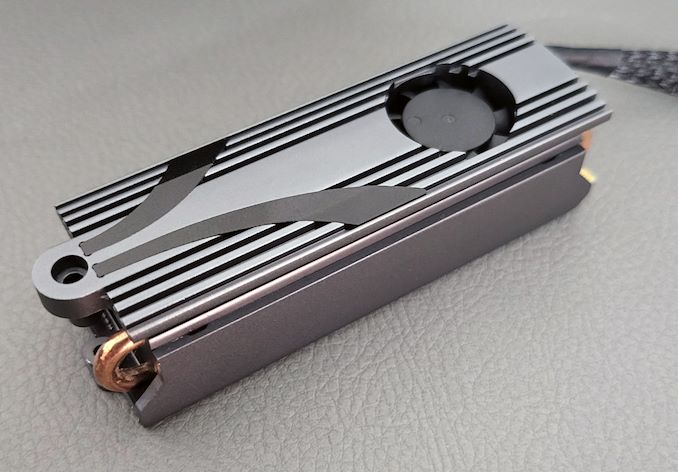
Sabrent on Friday announced the latest addition to its Rocket family of high-performance SSDs, the Rocket 5. Rated for sequential read speeds of over 14,000 MB/s and up to 1.4 million of random read/write IOPS, the drive is slated to be the fastest Phison-powered PCIe 5.0 drive released thus far. The Rocket 5 will work with regular coolers provided by motherboards, but will also come bundled with a sizable cooling system featuring a heat pipe and a fan.
Today's high-end PCIe Gen5 SSDs based on the Phison PS5026-E26 controller typically offer maximum sequential read speeds of 10 to 12 GB/second, depending on the generation of NAND used with the powerful controller. Initial drives were paired with 1600 MT/sec NAND, while more recent drives have been paired with 2000 MT/sec NAND. But with 2400 MT/sec NAND finally becoming available, Sabrent has been working with Phison to push the limit of what their controller can do, and finally come close to saturating the nearly 16GB/second PCIe 5.0 x4 interface.
So Sabrent went on to a mission to build a Phison E26-based SSD that could fully utilize a PCIe 5.0 x4 interface. The company first outlined plans to build a drive sequential read speed of over 14,000 MB/s in March last year and then demonstrated an SSD that could hit 14,179 MB/s in July. Hitting a particular performance level in a lab is one thing, but making a reliable storage product that consistently hits such a speed and does not cost an arm and a leg is another, so the company said it would take it a while to make its Rocket 5 a commercial product.
The scarce availability of fast 3D NAND has been the most critical bottleneck, with Sabrent (and other drive makers) waiting on Micron and others to begin shipping 2400 MT/sec TLC NAND in high volumes – which is now finally happening.
On Friday, Sabrent finally introduced its Rocket 5 family, which will consist of three models: initial 1 TB and 2 TB models, while a 4 TB model will come later. The higher-end 2 TB and 4 TB drives will offer a sequential read speed of up to 14,000 MB/s and a sequential write speed of up to 12,000 MB/s, as well as a random read/write performance of 1.4 million IOPS. The 1 TB model will be slightly slower due to lower level of parallelism, but it will still be measurably faster than many of the drives featuring a PCIe Gen5 x4 interface available today.
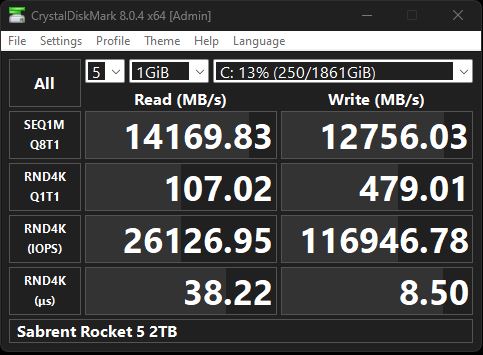
Interestingly, by peak performance of range-topping Rocket 5 drives is shown at 14,169 MB/s for reads and 12,756 MB/s for writes. Perhaps, some additional firmware tweaks will ensure even higher performance than Sabrent lists today, though we will see about that.
The company says that the Sabrent Rocket 5 drives will run just fine with heatsinks offered by high-end motherboards. Though for systems that for some reason do not come with pre-built heatsinks, Sabrent will bundle a rather sizable active cooler as well, for customers who need better cooling or just intend to beat on the drive with very long sustained writes.
Sabrent has not yet announced the pricing of its Rocket 5 drives. Though with TLC NAND prices currently on an upswing – never mind the high-end TLC Sabrent's drive will need to use – it's not too surprising to see drive manufacturers cautious about announcing drive pricing before anything is actually shipping.
Boas notícias! Os telemóveis Google já fazem parte da oferta de produtos em Portugal e os primeiros a chegarem ao nosso território foram os telemóveis recentemente lançados, os Pixel 8 e Pixel 8 Pro. O Pixel 7a também já pode ser comprado por cá e é desse que vamos falar neste conteúdo.
Este telemóvel da Google foi lançado em 2023 e é considerado por muitos uma boa aposta na casa dos 500€. Mas valerá a pena comprar este modelo ou o melhor será investir um pouco mais e comprar os Pixel 8 ou 8 Pro? Por aqui testamos o Pixel 7a durante uma semana e tiramos as nossas conclusões.
Unboxing e especificações do Pixel 7a
A caixa deste modelo da Google é simples e muito semelhante aos outros modelos da marca. Assim que se abre a caixa, deparamo-nos logo com o telemóvel e só depois encontramos as restantes peças que o acompanham.
Além do telemóvel, a embalagem tem o manual de utilizador, um cabo USB-C para USB-C, um adaptador e o acessório usado para colocar o cartão. Como já seria de esperar, o Pixel 7a veio sem forma de carregar, mas falaremos um pouco mais sobre isso à frente.
Passando para o telemóvel, o modelo da Google tem as seguintes especificações:
Bateria: 4385 mAh, 18 W (com fios) e 7,5 W (sem fios)
Certificação: IP67
Pontos a favor do Google Pixel 7a
1. Ecrã melhorado
A maior alteração do Pixel 7a em comparação com o modelo anterior é a sua taxa de atualização de até 90 Hz (pode ficar, no entanto, pelos 60 Hz). Nós ficamos muito surpreendidos com a fluidez que o telemóvel apresentou e acreditamos que irá satisfazer até os utilizadores mais exigentes.
O telemóvel também tem uma boa luminosidade e brilho e não tivemos grande dificuldade em o usar no sol.
Para concluir este ponto, o Pixel 7a é uma boa compra tanto para quem gosta de jogar, como para quem apenas consome conteúdo multimédia graças à sua resolução Full HD+.
2. Design e construção
Na nossa opinião, apesar de ser um modelo mais económico da Google, este é um dos telemóveis mais bem construídos tendo em conta o preço. O telemóvel é robusto, os botões têm um bom clique (um ponto que até nos deixou surpreendidos quando em comparação com outras marcas) e a proteção de ecrã é Gorilla Glass 3 (muito resistente a quedas!).
A nível de design, alguns pormenores podem não ser do agrado dos usuários, como é o caso da estrutura mais retangular. Mas, como tudo, esta é uma questão de preferência e é fácil até nos esquecermos dessas e outras questões menores.
3. Certificação IP67
Gosta de tirar fotografias debaixo de água? Este é o telemóvel certo! O modelo tem certificação IP67 que, de uma forma resumida, significa que o telemóvel é resistente à água até certo ponto.
Para que entenda melhor, o número 6 é o nível de proteção do telemóvel contra poeiras numa escala de 0 a 6, enquanto que o número 7 é a proteção contra a água numa escala que vai de 0 a 9. Apesar de não estar na escala máxima, já dá uma boa proteção!
Lembrando que existe uma proteção um pouco melhor, a IP68, que, atualmente, é a melhor do mercado.
Imagem do Google Pixel 7a, Genshin Impact, qualidade dos gráficos alta
Experimentamos alguns jogos, como o Genshin Impact por ser um dos mais pesados, e ficamos satisfeitos com o resultado. Lembrando que este modelo tem o processador Tensor G2, então não se espera um resultado tão impressionante quanto em outros modelos ao usar os gráficos no máximo, mas sinceramente jogamos algumas horas e ficamos satisfeitos com o resultado.
Agora se gosta de jogos um pouco menos pesados, como o Pokémon GO ou outros no mesmo nível, vai ficar muito satisfeito com esta compra.
Ah, e claro, não esquecer de ativar os 90Hz para uma melhor experiência. Lembrando, no entanto, que a consequência é menos autonomia.
5. Bons recursos
Imagem Pixel 7a: dicas Pixel
O Pixel 7a deixa tudo bem claro e quer que o utilizador tire o máximo partido deste telemóvel e por isso criou o “Dicas Pixel” às quais tem acesso a partir de qualquer lugar. Neste recurso encontra dicas básicas, funcionalidades inteligentes, dicas de navegação, personalização e segurança e muito mais.
Imagem Pixel 7a: urgências + deteção de segurança
Outra funcionalidade é o “Urgências” que o pode ajudar em situações de urgência SOS, deteção de acidentes de automóvel e alertas de crise. Para que tenha uma ideia, é possível que o telemóvel envie uma notificação de segurança na qual tem de informar que está bem, caso contrário a partilha de emergência começa em alguns segundos. Isto só mostra a preocupação que a marca tem para com os seus utilizadores.
Além disso, em teoria, o seu novo smartphone terá suporte até 2028.
6. Excelentes câmaras
Fotografia panorâmica capturada com o Pixel 7a
A nível de câmaras, o Pixel 7a foi melhorado em relação ao seu modelo anterior. A sua câmara principal é de 64 MP o que garante fotografias com uma excelente resolução. Mas, mais importante, são os recursos deste smartphone em questões de fotografias.
Imagem Pixel 7a: algumas funções de fotos
Pode-se usar o modo noturno (que é muito bom, diga-se de passagem), o recurso melhor foto (onde o Google inclui um breve vídeo para capturar mais do momento e ainda sugere enquadramentos que vale a pena guardar), o Apagador Mágico (para apagar objetos do fundo da imagem) e até mudar a luz e temperatura da foto.
7. Melhor som para a faixa de preço
E, para concluir, não podíamos deixar passar o que mais nos surpreendeu neste smartphone: o som. Tanto em altifalante como em chamada, o áudio apresenta poucas distorções e é possível ouvir música ou a pessoa do outro lado com clareza.
O ponto negativo, que também já se estaria à espera, é não ter entrada para jack 3,5 mm, mas já não é novidade nos dias de hoje. No entanto, se já se adapta aos bluetooth, temos boas notícias: o telemóvel vem com o Bluetooth 5.3 para uma melhor ligação.
Pontos menos favoráveis do Google Pixel 7a
1. Sem carregador
A Google começou a vender os seus smartphones sem carregadores, sendo que este modelo traz apenas um cabo USB-C para USB-C e um adaptador para ligar o cabo ao telemóvel. Para quem já tem uma tomada que carregue por USB-C ou um carregador que tenha essa entrada, esta alteração não será um problema, mas para quem isto é uma novidade, recomendamos que compre, também, um carregador.
Apesar de estar nos pontos menos favoráveis, não o vemos como uma desvantagem na compra do telemóvel, mas sim como um aviso para que invista também numa forma de carregar o seu novo smartphone.
2. Bateria deixa um pouco a desejar
A bateria também é um ponto que nos deixou um pouco desapontados já que se usar o telemóvel com alguma frequência e puxarmos demasiado por ele, podemos não conseguir ter bateria para o dia inteiro. Mas, para quem usa o telemóvel no dia-a-dia, não deverá ter quaisquer problemas com bateria.
O carregamento rápido também pode resolver esta questão já que alguns minutos chegam para ter o telemóvel funcional novamente.
3. Apenas um slot de cartão disponível
Para concluir, este modelo da Google suporta apenas um cartão SIM. Mas boas notícias, é possível usar o serviço eSIM que está explicado em mais pormenor nesta página de suporte da Google.
Como é óbvio, o Pixel 7a tem várias limitações, o que seria de esperar de um telemóvel de 500€. Mas, por este preço, o Pixel 7a é uma das melhores apostas e acreditamos que não vai ficar desiludido. Para sermos sinceros, nós não ficamos.
As pesquisas por perguntas do tipo ‘como clonar Instagram do meu namorado’, e buscas semelhantes a essa, têm crescido nos últimos anos. Isso se deve a insegurança e a suspeita de traição em muitos relacionamentos.
Graças às redes sociais é possível, atualmente, enviar de forma discreta mensagens de texto e fotos para pessoas desconhecidas através das mensagens diretas (DMs) – e um dos aplicativos mais populares do mercado que possui essa dinâmica é o Instagram.
Neste post esclarecemos por que as pessoas desejam espionar a rede social dos seus parceiros e como, efetivamente, é possível fazer isso.
O que torna o Instagram tão popular?
O Instagram é mais do que um aplicativo de compartilhamento de fotos. É uma rede social onde as pessoas fazem chamadas de voz e vídeo, enviam e recebem mensagens de texto e muito mais.
Portanto, você tem motivos para se preocupar se o seu parceiro passa muito tempo nesta plataforma. Se esse cenário é familiar para você, então sabemos que a pergunta ‘como clonar o Instagram do meu namorado?’ passa pela sua mente.
Felizmente, você pode usar um aplicativo espião de celular para monitorar o que seu namorado faz nesta plataforma. Um aplicativo rastreador de celular como o mSpy permite que você espie o seu namorado, que não saberá ou suspeitará do que está a acontecer devido a furtividade desta ferramenta.
Qual é o método mais rápido para realizar a clonagem?
Quando se trata de clonar o Instagram do seu namorado, muitos aplicativos e sites afirmam fornecer uma solução confiável e funcional. No entanto, você precisa ter em mente que muitos aplicativos são falsos e até prejudiciais à sua privacidade.
Quando se trata de aplicativos de monitoramento, poucos produtos no mercado chegam aos pés do mSpy. O aplicativo permite a você espiao para iPhone sem jailbreak em tempo real. Além disso, o aplicativo é fácil de usar e é compatível com dispositivos iPhone e Android. Aqui está alguns destaques:
Interface fácil de entender;
Funciona bem com dispositivos com root, sem root, com jailbreak e sem jailbreak;
Também rastreia chamadas, mensagens e contatos;
Permite baixar as fotos e vídeos do dispositivo monitorado;
Os dados de geofencing e localização GPS são bastante precisos;
O preço para dispositivos Android e iOS é o mesmo.
Veja também alguns outros métodos que valem a pena tentar
Além de utilizar um aplicativo espião, é possível espionar namorado Instagram de algumas outras formas. Entretanto, cada uma delas tem suas desvantagens.
Usando senhas salvas no navegador
Talvez uma das maneiras mais fáceis de clonar o Instagram do namorado seja roubando sua senha salva em seu navegador. Esta é uma abordagem totalmente gratuita que não requer habilidades avançadas.
Você só precisará saber as informações de login (endereço de e-mail, número de celular e senha) vinculado à conta do Instagram. No entanto, monitorar o perfil do seu namorado desta forma não é algo sustentável a longo prazo.
Assim que ele não puder mais acessar sua conta, ou perceber algo estranho, redefinirá rapidamente sua senha.
Redefinindo a senha da conta
Este é um caminho um pouco mais arriscado. Para isso, você vai precisar do celular do seu namorado em mãos. Em seguida, basta acessar o Instagram e clicar em “Esqueceu a senha” na tela principal se o perfil dele não estiver logado.
Por último, siga as instruções na tela e redefina a senha através do e-mail ou número de celular cadastrado. Após definir a nova senha você terá acesso a conta e poderá ver todas as mensagens, fotos e vídeos enviados e recebidos.
Conclusão
Quando você está passando por uma situação em que precisa recorrer a métodos de espionagem, é porque está passando por uma experiência emocional e psicologicamente desgastante e bastante assustadora.
É por isso que você precisa investir em uma solução prática e confiável, como o mSpy, que ajuda milhares de parceiros há anos ao redor do mundo. Se você não consegue utilizar esta ferramenta, então só resta recorrer aos outros métodos que listamos acima.
Quer comprar um telemóvel novo nos primeiros saldos do ano, de preferência com uma boa relação custo-benefício, e não sabe qual escolher? A escolha acertada depende de vários fatores, como as necessidades em relação ao telemóvel ou mesmo o preço do aparelho que, sabemos, é um dos mais importantes.
Para o ajudar na decisão, vamos partilhar consigo quatro sugestões de telemóveis até 500€ que, acreditamos, possam suprimir as necessidades da maioria das pessoas dentro dos possíveis.
Mas antes de passarmos ao conteúdo, lembramos que além das promoções de início de ano, também pode optar por comprar o novo dispositivo a prestações para que fique menos pesado na carteira.
Sem mais demoras, seguem-se as nossas sugestões para aproveitar os saldos deste início de ano.
Os melhores telemóveis para comprar nos primeiros saldos de 2024
Boas notícias: os telemóveis da marca Pixel podem finalmente ser comprados em Portugal! Esta notícia chegou-nos com a entrada dos Google Pixel 8 e Pixel 8 Pro. Os modelos que vimos recomendar não são estes, mas sim os Google Pixel 6a que têm um preço dentro do budget.
O Pixel 6a traz uma câmara principal dupla de 12 MP e uma câmara frontal de 8 MP que, apesar de não serem as melhores do mercado, já deixam alguns utilizadores satisfeitos. Isto já para não falar do Night Mode que melhora as fotografias capturadas em ambientes com pouca luminosidade.
O modelo 7a tem umas caraterísticas melhores e também pode ser encontrado a menos de 500€ em algumas lojas com os saldos: basta dar uma vista de olhos. O modelo foi lançado este ano e apresenta algumas melhorias, como uma câmara ultra-ampla, uma bateria muito melhor a nível de autonomia e muito mais.
Se é fã da Apple e ainda não teve a oportunidade de ter um telemóvel da marca, aqui está uma opção. O iPhone SE 2022 não é o melhor modelo da marca, como seria de esperar por causa do preço, mas é um modelo que já vai deixar muitas pessoas satisfeitas.
A memória RAM é de 4 GB, o processador usado é Apple A15 Bionic e a nível de fotografias acreditamos que ficará satisfeito. Se dá para os jogos mais pesados? Nem todos, mas já abrange uma grande variedade deles.
Se quiser pagar um pouco menos pelo telemóvel, opte pela compra de um recondicionado. Ao comprar um telemóvel recondicionado, não se esqueça de avaliar o produto e ainda comparar o preço em diferentes lojas para se certificar que consegue a melhor compra ao melhor preço.
3. Oppo Find X5 5G
Passando para o Oppo Find X5, o mais importante é que este modelo já vem com 5G para que tenha uma melhor conexão à internet. Este modelo é um pouco melhor que o anterior da Apple quando falamos em gaming, já que traz uma memória RAM de 8 GB e um processador que também não fica muito atrás (embora não seja dos melhores).
Este modelo realmente surpreendeu até os usuários mais exigentes e continua a ser uma boa recomendação, mesmo após um ano do seu lançamento, e principalmente dentro do budget dos 500€.
Já da Xiaomi, recomendamos o Xiaomi 13 Lite que tem várias caraterísticas positivas, como a sua memória RAM de 8 GB, um bom carregamento rápido, um desempenho sólido das suas câmaras e mesmo o processador. Como ponto negativo, tem-se a duração da bateria.
Quanto ao sistema de câmaras, o telemóvel não desaponta com as suas três câmaras traseiras (50 MP + 8 MP + 2 MP) e a sua câmara frontal (32 MP + 8 MP). Uma escolha acertada se gosta de tirar fotografias.
Tem mais alguma sugestão? Deixe-a nos comentários.
Microsoft is betting big on artificial intelligence and generative AI at all levels of the company, from servers and Azure down to individual Windows PCs. And that big bet is about to become a lot more visible on Windows machines in the future, as Microsoft has instructed Windows OEMs to change their keyboard layouts to include a dedicated key for their Copilot AI service. Replacing the Menu key (or equivalent) on Windows 11 laptop keyboards, the repurposed key will instead provide direct access to Copilot, launching Microsoft's hub application for on-system AI.
The Copilot key's primary function is to activate the Copilot generative AI assistant in Windows 11, provided that it the system has Copilot installed and logged in to a Microsoft account. Otherwise, on PCs without access to Copilot, the key will instead default to opening up Windows Search, largely mirroring the existing functionality of the Windows key today.
Microsoft's decision to promote Copiot by making it a top-level, OEM-required key is a notable decision. The company has tinkered with repurposing the Windows and Menu keys at various times – most recently with desktop keyboards with dedicated Office and Emoji keys – but this is the most significant change to OEM keyboard requirements in quite some time. For most of the last two decades, the bulk of the changes there has been directing OEMs to use the latest Windows iconography. Ultimately, this strategic placement signifies the importance Microsoft places on the Copilot assistant, aiming to make it as accessible as possible to the end-user.
But the decision to dedicate a physical key to Copilot means that another key's function has needed to go, especially on cramped laptop keyboards. A Microsoft demonstration video showcased its placement between the right Alt button and arrow keys, a spot that was previously reserved for the Menu key on Microsoft Surface keyboards. These key changes also impact OEMs who instead used that physical key for another primary function such as a right-Ctrl (e.g. Dell), while offering Menu as a secondary function. Photos of the latest laptops from those vendors have shown that those keys have been repurposed to Copilot keys as well, in-line with Microsoft's own claims that the Copilot key would be coming to non-Microsoft OEM systems as well.
In any case, this is a solid example of the influence that Microsoft exerts over its OEM customers. The requirements for Windows certification give Microsoft a great deal of power over the design of a laptop, including, as we're now being reminded, the keyboards. Unfortunately, this means that Microsoft has seemingly also stripped OEMs of the flexibility to use the Menu key location for other roles.
This change in keyboard functionality comes as all of Microsoft's hardware partners have launched or are about to launch CPUs with neural processing units (NPUs), providing on-device acceleration for low-precision neural network inference. With PCs based on AMD's Ryzen Mobile 7000/8000, Intel's 14th Generation Core Ultra, and Qualcomm's Snapdragon processors all offering NPUs, Microsoft and its hardware partners are preparing for what they hope to be a major paradigm shift in PC capabilities and use-cases.
"Together [with AMD, Intel, and Qualcomm], we are putting new system architectures in place to power new Windows AI experiences bringing together the GPU, CPU, NPU and the cloud," a statement by Microsoft reads.
In general, this hardware integration — which involves NPU support and a dedicated keyboard key — is a significant step for Microsoft that highlights the company's commitment to making generative AI an integral part of computing. The Copilot key and acceleration by NPUs, unlike some past Microsoft initiatives, represents a direct hardware incorporation of its AI technology. These moves, alongside the development of AI-driven features for Windows sets a new precedent in the integration of AI into both PC software and hardware.
Meanwhile, with the current focus on laptops, it remains to be seen how the Copilot key will be implemented in traditional desktop keyboards. With the core ANSI 104 layout already full, it's likely that desktop keyboards will have their Menu keys repurposed and re-logoed as well.
With CES 2024 fast approaching, AMD has announced two new products designed to enhance user's experience in the automotive sphere. The first is the XA Versal AI Edge series, their first 7 nm device to be automotive qualified, with a new AI engine and vector processor array designed to drive safety and improve LiDAR, radar, and cameras, all while driving more AI inferencing within a vehicle.
The second is the AMD Ryzen Embedded V2000A series of processors, designed to deliver a paradigm shift in digital cockpits, enhance driver experience, improve in-car entertainment, and have higher levels of media focused performance. Both AMD's XA Versal AI Edge and the Ryzen Embedded V2000A series promise to deliver a much more enhanced user experience, whether that be drivers reliant on digital and AI-assisted safety features as well as passenger entertainment as we go into what is set to be a pivotal year for AI.
AMD XA Versal AI Edge: Scalable From Edge to Accelerators
Perhaps one of the most significant talking points within the industry, and outside of it, is AI and how it looks to transform how we do things. While machine learning and generative AI are two main topics, how we use AI and how companies adopt it into their software and designs are critical as we head into 2024. AI isn't just about making things better; it's a tool that brings many benefits through things such as generative AI. Within the PC industry, both Intel (Meteor Lake) and AMD (Ryzen AI) bring on-chip inferencing to the PC market; AMD is bringing a more robust approach to the automotive industry, specifically within digital cockpits of new vehicles for those on the go with XA Versal AI Edge.
At the core of the AMD XA Versal AI Edge series lies AMD's first 7 nm device to achieve automotive qualification. This milestone underscores AMD's commitment to innovation and ensures that the series meets the stringent standards required by automotive applications. The significance of this comes through the ability of the XA Versal AI Edge series to seamlessly integrate into modern vehicles' ever-growing and complex ecosystem. The XA Versal AI Edge chip comes through AMD's acquisition of Xilinx in 2022, bringing many advancements to AMD's portfolio, including their client-focused Ryzen AI engine block within the latest Ryzen 8040 series of mobile processors.
With XA Versal AI comes a new vector processor array specifically designed to drive more comprehensive automotive safety features to the market. By improving the functionality and efficiency of crucial components such as LiDAR, radar, and cameras, the XA Versal AI Edge series enhances precision and responsiveness to vehicle systems. This is particularly vital in AI inferencing within a vehicle, where split-second decisions based on accurate sensor data can differentiate between safety and what could be an absolute disaster, such as a crash or collision.
The XA Versal AI Edge series has improved AI inferencing capabilities and is designed to boost the vehicle's ability to navigate and interact with its surroundings. This helps pave the way for more advanced autonomous driving features, with lower real-time processing and lower latencies providing benefits while driving. By processing vast amounts of data in real-time, the XA Versal AI Edge chips enable a more responsive interaction between the vehicle and the driver. This translates to a faster and more secure ecosystem, which enhances both the driver's and passengers' confidence in the vehicle's capabilities.
One advantage of AMD's XA Versal AI Edge solutions is their scalability, with their lead model, the XAVE2602, combining 152 AI Engine tiles with 820k logic cells, as well as 984 Digital Signal Processors (DSP), with AMD claiming up to 89 TOPS of INT8 performance across the AI engine, the DSP and Programmable Logic. There are options ranging from 5 TOPS to 171 TOPS, with seven options for different devices and markets. At the heart of AMD's XA Versal AI Edge chips are a dual-core Arm Cortex A72 APU and a dual-core Arm Cortex R5F RPT unit, which range from 6-9 W (XAVE2002) up to a potent 75 W (XAVE2802) estimated power usage. It's worth highlighting that all of AMD's TOPS figures for their XA Versal AI Edge chips are estimated by AMD engineers and aren't verified externally.
Having a varied level of scalability from the same Arm Cortex Dual-Dual core pairing allows AMD to accommodate varying levels of devices, from LiDAR sensors to radar and regular cameras. It also means AMD only needs one design that scales with the same tooling, software, and general ecosystem so that manufacturers using these Versal AI Edge chips can select the one that suits their performance needs. Another element to consider is that as devices scale into better designs, their iterations are on the same platform, meaning a new product design can be created using the same overall ecosystem.
Ryzen Embedded V2000A: 7 nm with Zen 2 Cores
Moving to the second of AMD's automotive-related announcements for CES 2024 is the Ryzen Embedded V2000A series. This new line of processors is designed to initiate the emergence of AI within the digital automotive cockpit. Designed to meet the evolving needs of both drivers and passengers, AMD has designed the V2000A series to deliver higher performance, enhancing multiple aspects of the in-car experience. Ryzen Embedded V2000 is not a mere incremental upgrade but represents a shift in how users can interact with and use vehicle entertainment and infotainment systems.
Replacing the previous Zen-based 4C/8T V1000 APU, the new Ryzen Embedded V2000A series is designed to handle the complex requirements of advanced driver interfaces and in-car entertainment systems. The results in improved graphics quality and a faster response to user inputs, leading to a smoother interaction with the vehicle's systems. For drivers, this means more intuitive control panels and heads-up displays and enhancing access to critical information and controls with minimal distractions. Passengers also benefit, with the series supporting high-definition streaming and gaming experiences, elevating the overall in-car entertainment experience to levels similar to home or mobile platforms.
The Ryzen Embedded V2000A series is built on the 7 nm manufacturing process and, as a result, uses Zen 2 cores combined with AMD's Radeon Vega 7 graphics. Featuring up to 6C/12T with Zen 2 cores, with 7 CUs of Radeon Vega graphics, the Ryzen Embedded V2000A has support for up to four 4K displays, with dual Gigabit Ethernet, and is AEC-Q100 automotive qualified. Looking ahead to the next generation of automotive silicon and with AI as a key selling point, Ryzen Embedded V2000A has a planned availability of 10 years, which ensures companies and automotive partners adopting V200A into their vehicles are guaranteed availability.
Some of AMD's partners onboard with XA Versal AI and Ryzen Embedded V2000A include notable electric car maker Tesla, with Ecarx, Luxoft, BlackBerry/QNX, Xylon, and Cognata also looking to implement these new chips into their automotive products.
AMD states that the first device, the XAVE1752, will be available in early 2024, with the remaining devices coming to market before the end of 2024. AMD also notes that the AXVEK 280 Evaluation Kit is now available to partners and manufacturers. AMD will demonstrate their XA Versal AI Edge at their booth, among other automotive solutions, at CES 2024. For reference, the AMD booth is located at the Las Vegas Convention Center (LVCC) within the West Hall at #W319.